
Pax8 Data Exposure
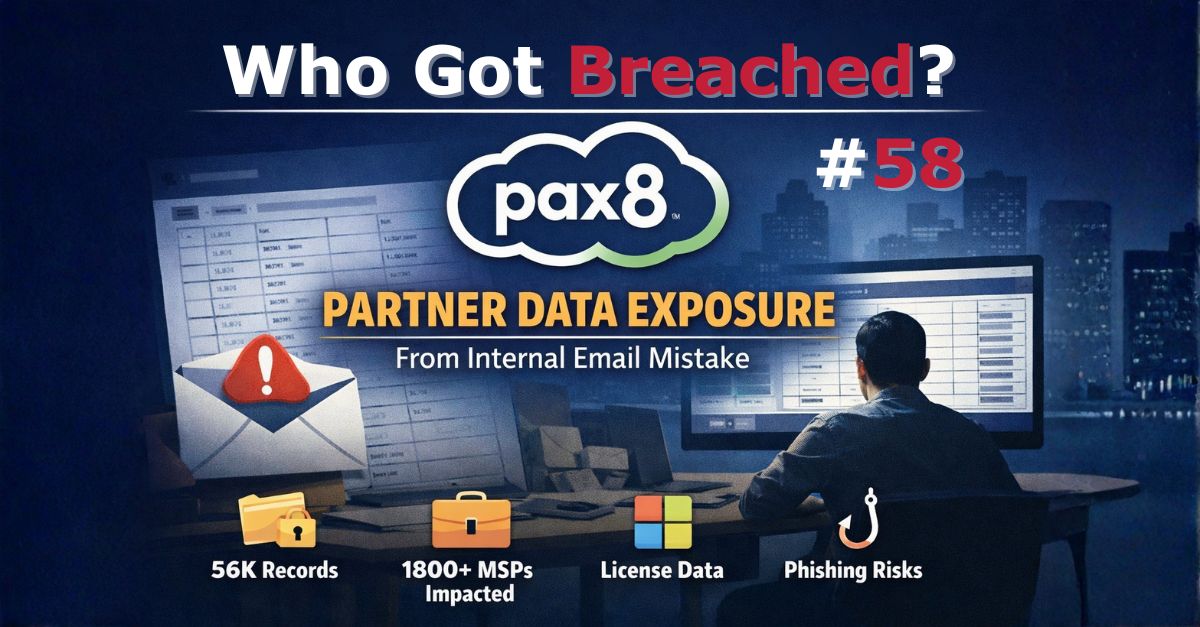
This wasn’t a “hack.” It was an internal email mistake - and it still created real risk for partners and customers.
Overview
Pax8, a well-known cloud marketplace that connects managed service providers (MSPs) with major software vendors, recently disclosed a data exposure incident. The issue did not involve hackers breaking into systems, malware, or ransomware. Instead, it was caused by a simple internal mistake that led to sensitive business information being shared with unintended recipients.
While no personal data was exposed, the incident affected a large number of partners and highlighted how easily sensitive commercial data can be leaked - even without a cyberattack.
How it happened
On January 13, 2026, a Pax8 employee mistakenly sent an email with an attached spreadsheet to fewer than 40 UK-based partner organizations. Although the recipient list was limited, the file itself contained information connected to a much wider set of MSP partners and customer organizations.
Reporting indicates the attachment contained over 56,000 entries with business-related data such as partner and customer names and IDs, Microsoft product SKUs, license counts, renewal dates, transaction types, and pricing/program details. The impact was reported as primarily UK-based, with at least one affected organization outside the UK.
Important context: This incident is best described as an accidental data exposure (human error), not a platform compromise. But the downstream risk can look very similar to a traditional breach.
Risks
Even without passwords or personal information, business data can still be highly valuable.
First, competitors could potentially use the information for commercial intelligence - for example, to identify customer portfolios, target renewals, or understand pricing dynamics. Second, threat actors can use real details (like renewal dates or product SKUs) to craft convincing phishing emails that look legitimate because they reference accurate licensing information.
Several reports also noted that cybercriminals attempted to purchase the leaked dataset, which suggests the information has perceived value in underground markets - especially for targeted scams and social engineering.
Recommendations
Incidents like this are a reminder that cybersecurity isn’t only about stopping hackers. It’s also about reducing the chance of mistakes and limiting the damage when they happen.
For organizations and service providers, focus on tightening everyday controls around data handling. Restrict who can export large datasets, add safeguards for outbound emails with attachments, and use data loss prevention (DLP) controls to flag risky messages before they leave the organization. Training matters too - not as a checkbox, but as a regular habit for teams that handle partner and customer information.
For customers and end users, stay alert for unusually specific emails about renewals, licensing, or account changes. If a message contains “inside baseball” details, treat it as a reason to verify - not a reason to trust. Confirm requests through official channels and avoid sharing information based on email alone.